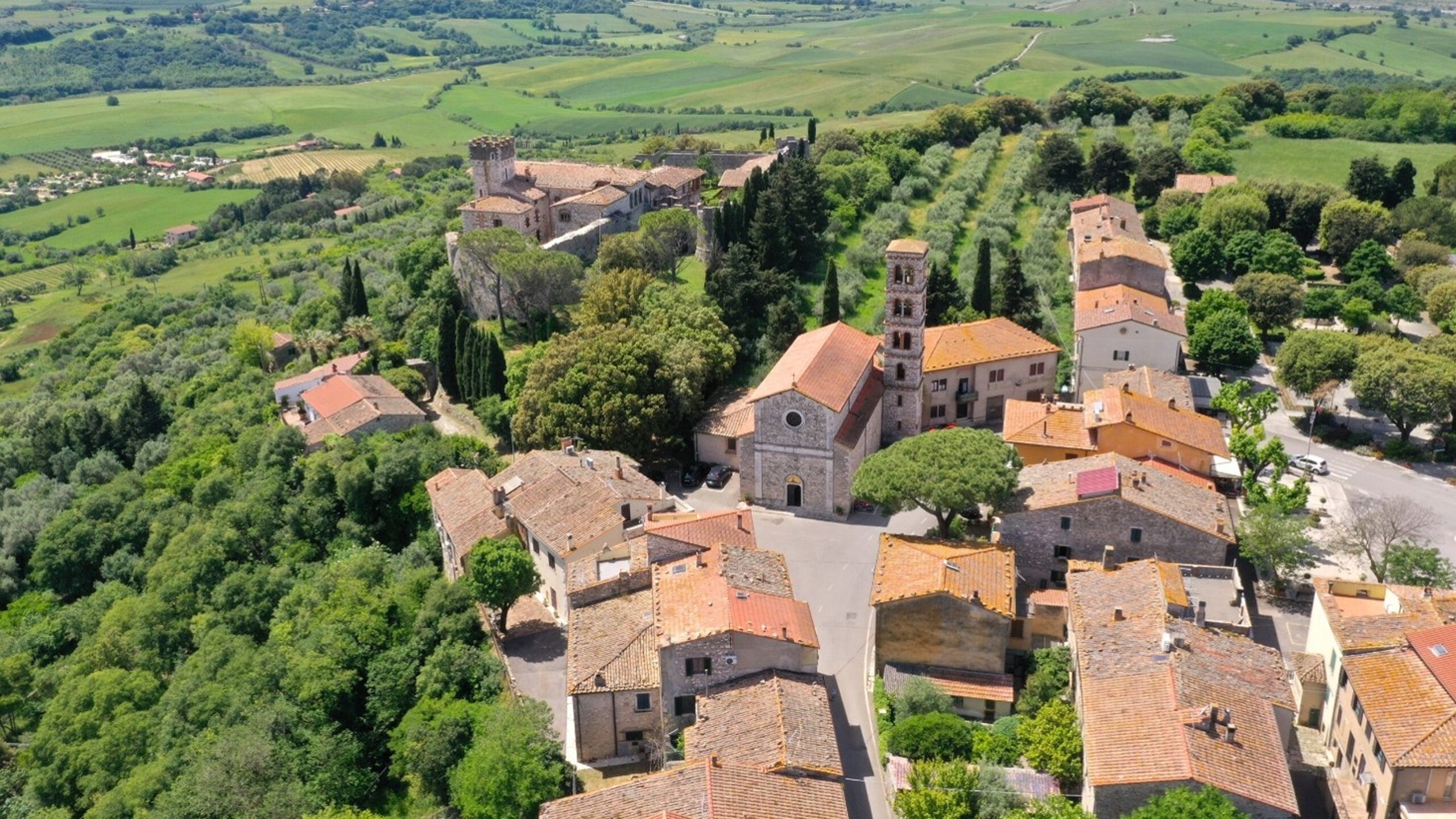
The legendary figure of the knight Orlando has inspired countless folk tales, one of which remains deeply rooted in Saturnia. According to local tradition, when the wind blows in the right direction, it is still possible to hear the sound of Orlando's Oliphant echoing across the countryside.
The Legend of Orlando
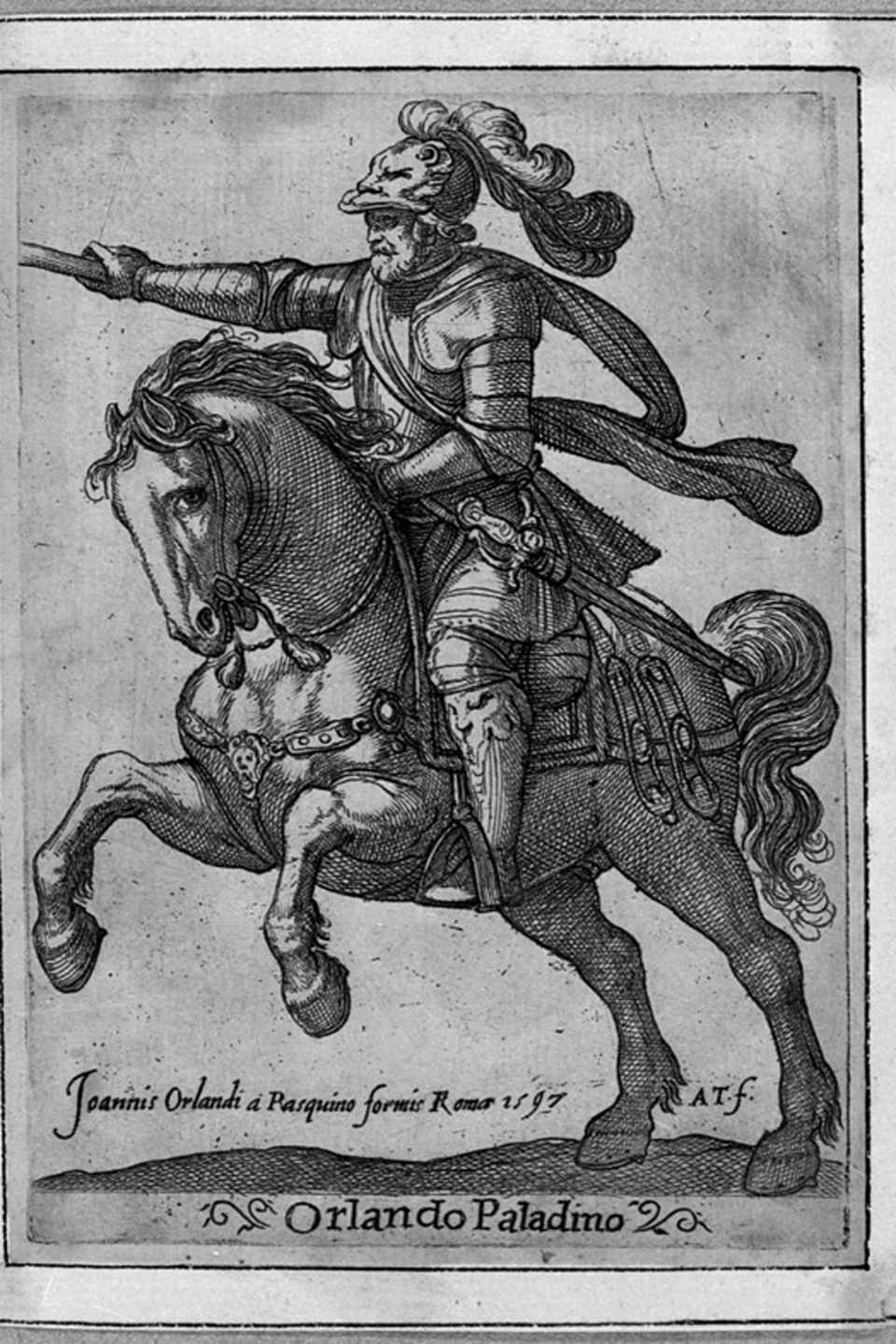
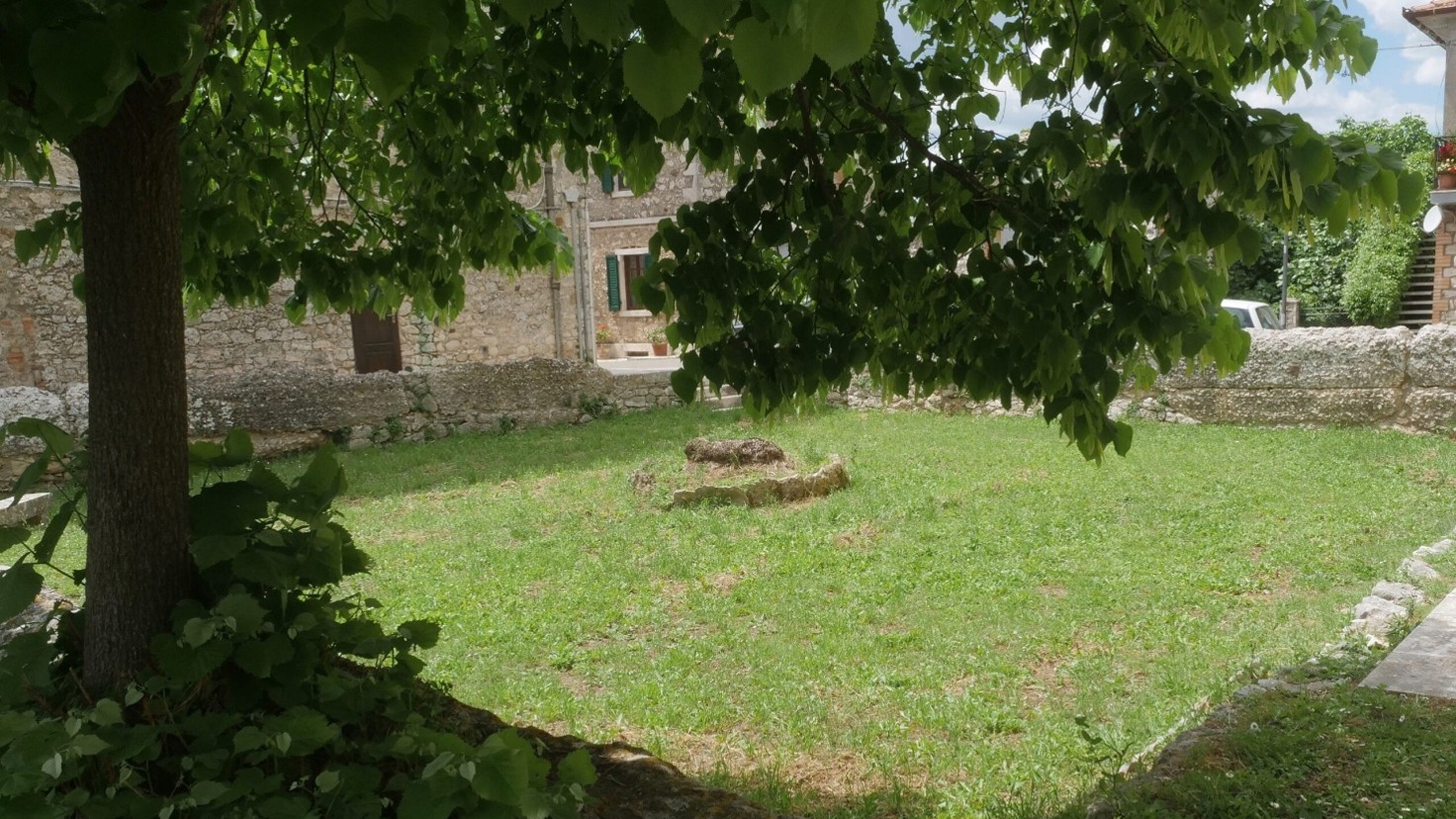
Legend tells that Orlando, travelling towards Paris together with Rinaldo, stopped on the hills surrounding Saturnia. Suddenly, Rinaldo vanished without a trace. Worried, Orlando searched for him throughout the village but found its gates firmly closed. With a prodigious feat, he hurled his horse over the walls and leapt after it. The horse landed with such force that its hoof left an imprint in the stone.
Inside the walls, Orlando found himself caught in a fierce battle. The more enemies he defeated, the more seemed to rise again. He soon discovered the reason: an old healer was tending the wounded knights with a small pot of miraculous water, restoring their strength and life. Orlando then drew his sword and struck the woman, cutting her in two. He plunged Durendal into the spring from which the water flowed and pronounced his famous curse:
"Spring hidden within the walls, may you heal nothing but scabies and mange!"
The water disappeared into the depths of the travertine rock, only to re-emerge on the plain below. A vast underground passage opened, and Orlando ventured inside. There he found statues of knights, men, and horses. A mysterious woman tried to enchant him, but he resisted her spell and drew his sword. The woman threw herself at his feet, begging for mercy. Orlando spared her and continued until he found Rinaldo, turned to stone by a love enchantment alongside his horse.
At that point Orlando lost his patience. He struck the woman — who was in fact a witch — severing one of her legs. Freed from the spell, Rinaldo joined his companion, and together they laid waste to the city.
When they reached the plain, the two knights encountered Gradasso, the Saracen warrior. He first challenged Rinaldo but soon fled. He later returned to fight Orlando, only to be defeated once again and forced to abandon his horses and supplies.
This version of the legend was handed down by Marino Corridori and Asio Rossi, born in 1911 and 1922 respectively. A slightly different version was told by Tebaldo Serafini (1908):
"Orlando found an old woman and asked her, 'Why is it that the more I strike them, the more of them appear?' She replied, 'Spare my life and I will reveal the secret.' Orlando answered, 'I will spare you, but only if you are baptized.' To save herself, the old woman confessed that inside the walls of Saturnia there was a pool where anyone who entered emerged healed.
Then Orlando spoke to his horse. And the horse, which could speak, said: 'Hold on, Orlando, I shall leap over the walls!' Once inside, Orlando plunged his sword into the pool and declared: 'Spring hidden within these walls, flow outside! May you heal nothing but scabies and mange!'
It is said that from that moment the waters began flowing where the famous Baths of Saturnia are located today."
Tebaldo Serafini
The "Amilcare Ponchielli" Philharmonic Band
A symbol of Saturnia's cultural vitality is the "Amilcare Ponchielli" Philharmonic Band, founded in 1914. Under the direction of Tommaso Furzi, and later the young conductor Diego Chiti from Manciano, the ensemble achieved remarkable artistic success, becoming one of the community's greatest sources of pride. Thanks to Chiti's dedication — recognised in 1953 for his thirty years of service — the passion for music has continued to thrive, passing from one generation of Saturnia's residents to the next.
The May 6 Fair
Saturnia's traditions are also closely linked to the great annual fair that was once held in the village every 6 May. Nicolosi vividly described how the event brought together people from across the Maremma:
Saturnia relives its finest days. Mighty bulls climb from the pastures along the Ombrone; Marsiliana sends its fine-fleeced sheep; mares and foals of the finest Maremman breeds arrive from Campagnatico and Grosseto, from the Fiora Valley and the Chiarone; oxen, majestic as monuments, fill the streets with their crescent-shaped horns; the age-old wealth of the Maremma gathers in its ancient capital. Between the few houses, an entirely new town of tents and wooden stalls suddenly appears. Crowds bustle with bargaining, buying and selling amid the sharp smell of fried food and the thick smoke of open-air kitchens. For one day, Saturnia reigns supreme once again.
Nicolosi