
The founding myth and Pelasgian origins
Saturnia is linked to an ancient founding myth dating back at least to the time of the Pelasgians, known for their extraordinary ability to build dry-stone walls — today called Cyclopean walls — which have led scholars to believe that an ancient fortification once stood here. However, beyond the legend, historical reality — although perhaps less fascinating — is still highly interesting. The first people to permanently settle in the area were the Etruscans, and they did so for well-founded reasons, as highlighted by Cavoli: the territory offered promising prospects for the future.
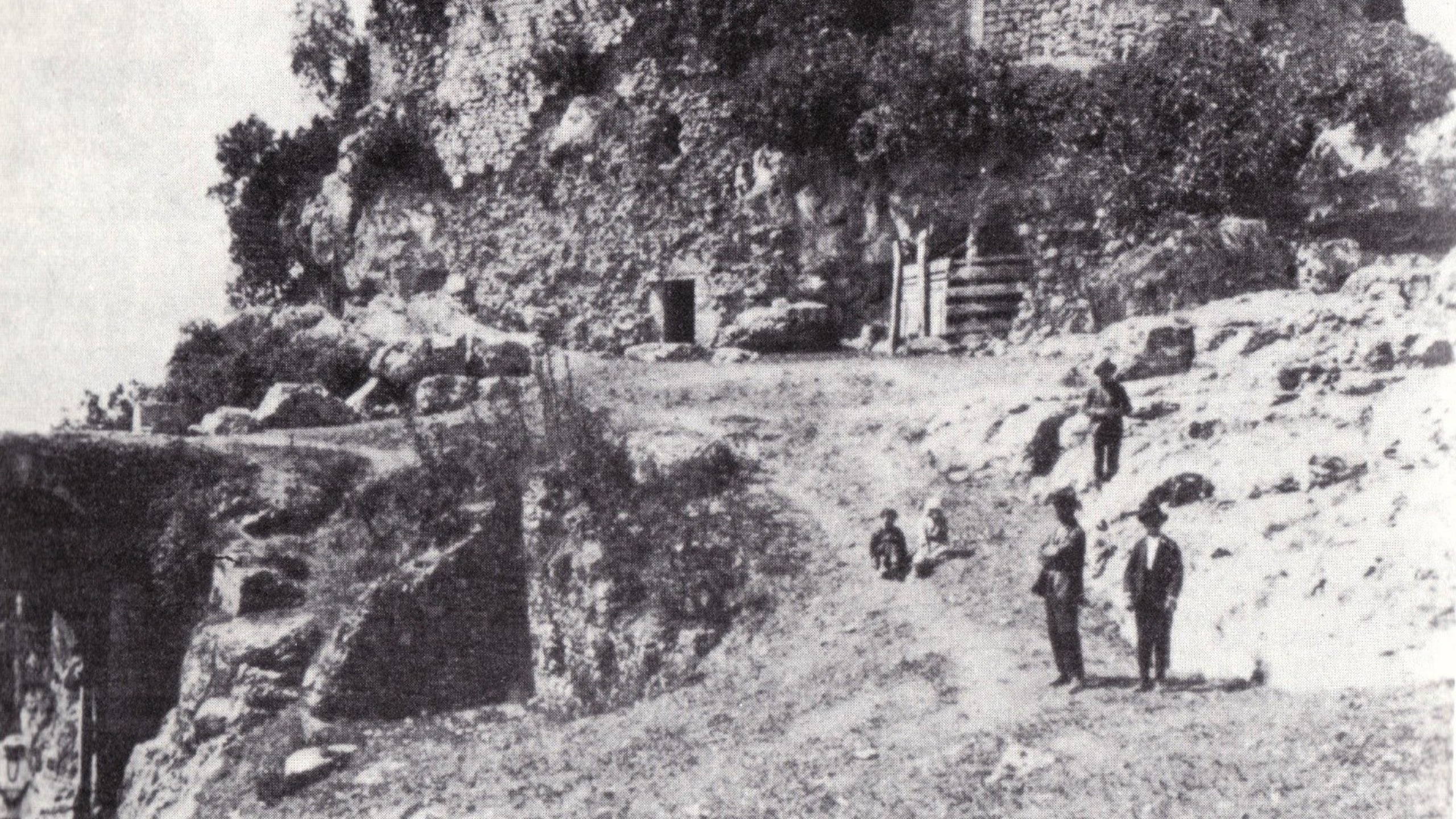
The Etruscan name of Saturnia remains uncertain: Urna, Urina, or Aurinia? What is certain, however, is that the Etruscans were the ones who built a strong defensive wall, adapting it to the shape of the cliff.
Aurinia, the Etruscan ancestor
Before being called Saturnia, the village was known as Aurinia, an important Etruscan center of the Ager Caletranus. It was one of the main urban hubs of the ancient Maremma system before the nearby center of Caletra lost its leading role.
In its early centuries, Saturnia was probably under the control of Caletra, a wealthy and refined city itself connected to Vulci, one of the twelve powerful Etruscan cities. Caletra experienced a century of prosperity before beginning its decline. Its exact location is now uncertain, although it is believed to have been near Marsiliana, where the castle of the Princes Corsini stands today.
With the decline of Caletra, another nearby city, Heba, began to flourish, attracting Caletran inhabitants toward its mines. In this balance of power and migrations, Saturnia emerged as the new dominant center, controlling the area between Monte Amiata and the Tyrrhenian Sea until the arrival of the Romans.
The Roman era and the Via Clodia
During the wars against Pyrrhus, the Romans settled in Etruria and also confronted Vulci. A treaty forced Vulci to cede the Argentario area and the valleys of the Fiora and Albegna rivers. From 183 BC, the triumvirs Q. Fabio Labeone, G. Afranio Stellione, and T. Sempronio Gracco founded a Roman colony of citizens in Saturnia. The place names Monte Labbro, Stellata, and Semproniano may derive from their names.
The Romans left tangible traces of their presence: sections of paved roads, remains of the castellum aquarum, walls in opus reticulatum, and numerous inscriptions. The city was crossed by the Via Clodia, a road that connected Rome with the Tyrrhenian coast, passing through Vetulonia and Roselle.
In 280 BC, Saturnia became a prefecture with military and administrative functions: justice was administered and markets were held, although the city did not have its own magistrates and instead received an annual prefect from Rome. The territory of Caletra, like the entire Tuscan-Latium Maremma area, represented a fundamental agricultural resource for Rome, supplying grain for bread production.
Wars, destruction, and invasions
In the 2nd century BC, Saturnia expanded and experienced periods of peace as well as conflict. During the civil war between Sulla and Marius, in 80 BC, the latter found refuge in the city, which was subsequently besieged and destroyed.
Slowly rebuilt, Saturnia faced further devastation: in 441 AD, the Goths led by Athaulf, returning from the sack of Rome, devastated the region, and Saturnia appears to have been affected as well. It suffered further damage from Saracen raids, including those led by Abdul Kassem.
The Aldobrandeschi family and medieval conflicts
A long period of abandonment followed. Saturnia’s history resumed with the Aldobrandeschi, local lords and tireless builders of castles, who settled in Sovana after the fall of Roselle. They built towers and fortifications and decided to keep ownership of the thermal baths in common, allowing everyone to benefit from them.
It is said that Margherita Aldobrandeschi, the last member of the dynasty, gave birth to her daughter Anastasia in Saturnia itself. Later, Orvieto and Siena competed for control of the territory: in 1293, Saturnia surrendered to Orvieto. But six years later, an attack on an ambassador gave Siena the pretext to intervene: the city was set on fire. In 1299, by then a refuge for bandits, it was definitively destroyed by the Sienese.
Between the 13th and 15th centuries, Saturnia was the scene of continuous struggles between Siena, Orvieto, and Perugia, which fought over the Sovana fief and above all the thermal baths, a strategic and highly coveted resource. Constant political changes and poor management of the territory led to its decline.
Abandonment and silence
In 1416, the Sienese sent two stonemasons to repair the fortress, but the population was missing, exhausted by decades of violence. Instead, bandits arrived. Two years later, the Sienese cleared the area by force and, to prevent further criminal settlements, demolished everything: walls, houses, and buildings.
Saturnia thus fell into a deep state of abandonment, swept by the winter winds of Monte Amiata and suffocated in summer by the malaria of the surrounding marshes. A place of shadows, where history seemed to have come to a standstill.
The revival in the 20th century
During the Middle Ages, Saturnia was fortified in the 15th century by Alberto da Lugano, and the ancient walls were modified and rebuilt several times. Castello Ciacci, built in 1929, represents the symbol of Saturnia’s new identity in the 20th century, giving the village renewed architectural dignity and visual character.
Today, walking through the narrow streets of the historic center means travelling through time, from the pre-Roman civilizations to the contemporary era.